No products in the cart.
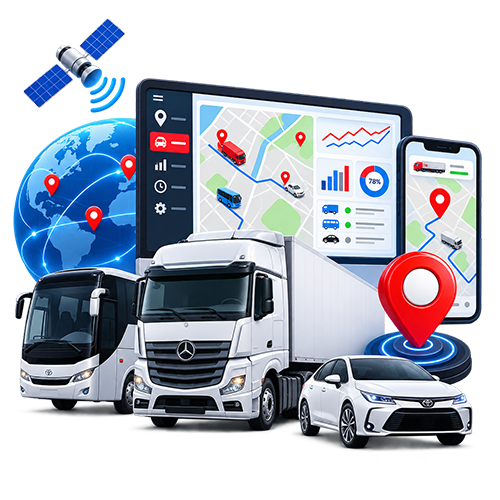

GPS Tracking for Construction Companies in Afghanistan is becoming increasingly useful for contractors that need better visibility over vehicles, heavy machinery, generators, and equipment operating across multiple project sites.
A construction company may have excavators working at one location, dump trucks transporting materials at another, pickups moving engineers between projects, and generators operating at remote sites.
Managing all of this manually can be difficult.
Managers need answers to simple but important questions:
Where is the equipment?
Is it working or sitting idle?
How long has the engine been running?
How much fuel is being consumed?
Has a vehicle left the construction site?
Is equipment being used outside working hours?
Which machine requires maintenance?
Modern GPS tracking and fleet-management technology can bring this information together into one platform.
Sahil Tracking already provides real-time tracking, geofencing, fuel monitoring, driver monitoring, alerts, reports and maintenance-management functionality that can be applied to construction fleet operations.
What Is Construction GPS Tracking?
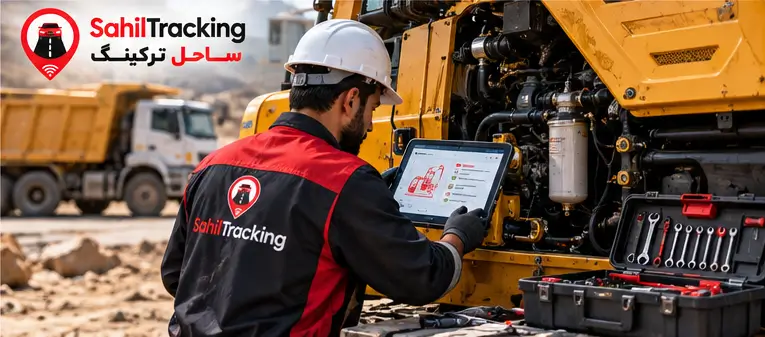
Construction GPS tracking uses GPS devices, cellular connectivity, sensors and fleet-management software to monitor vehicles and equipment.
A GPS device installed on a vehicle or machine determines its location and sends available operational information to a tracking platform.
Depending on the equipment, hardware and integration, managers may be able to monitor:
- Current location
- Movement
- Speed
- Ignition status
- Engine hours
- Idle time
- Previous routes
- Site entry and exit
- Fuel information
- Driver activity
- Maintenance schedules
- Security events
Modern construction telematics can go beyond simple GPS location by combining positioning with engine and equipment data. Industry platforms commonly use this information to monitor utilization, fuel usage, engine hours and maintenance.
Why Construction Companies in Afghanistan Need GPS Tracking
Construction fleet management is different from managing a small group of normal passenger cars.
A contractor may operate a mixed fleet containing:
- Excavators
- Bulldozers
- Loaders
- Graders
- Cranes
- Dump trucks
- Concrete mixers
- Water tankers
- Fuel tankers
- Toyota Hilux pickups
- Toyota Land Cruisers
- Service vehicles
- Generators
- Compressors
- Trailers
These assets may also be distributed between different projects.
Sahil Tracking’s existing Afghanistan fleet-management guide identifies equipment utilization, project monitoring and cost control as key construction use cases.
The challenge isn’t simply knowing where a truck is.
The real objective is understanding how the entire fleet is being used.
1. Track Construction Vehicles in Real Time
Real-time GPS tracking provides construction managers with visibility over vehicles and compatible equipment.
Instead of repeatedly calling drivers or site supervisors to ask where a vehicle is, authorized managers can check the tracking platform.
Sahil Tracking’s fleet platform currently provides live vehicle location, trip playback and geofencing capabilities.
For example, a construction company operating projects in Kabul and other provinces could use GPS tracking to monitor vehicles traveling between:
Head office → warehouse → construction site → supplier → project site
This can make dispatching and coordination easier.
2. Track Heavy Equipment Across Construction Sites
Heavy equipment represents a significant investment for construction companies.
An excavator, loader or bulldozer that cannot be located quickly or is sitting unused can create operational problems.
GPS and telematics can help construction managers understand where equipment is located and, with suitable hardware, whether it is operating.
Construction-industry telematics commonly supports monitoring of heavy equipment location, engine hours and usage across multiple job sites.
This is useful when equipment frequently moves between projects.
Example
Imagine a company owns:
5 excavators
3 loaders
8 dump trucks
2 graders
12 pickups
Without centralized tracking, managers may depend on phone calls, spreadsheets and reports from individual sites.
With fleet-management software, authorized staff can get a centralized view of tracked assets.
3. Improve Equipment Utilization
Owning expensive machinery doesn’t automatically mean it is being used efficiently.
One project might have two excavators but need only one.
Another site might be waiting for an excavator.
Without utilization information, managers may consider renting or purchasing additional equipment while an existing machine remains underused elsewhere.
Construction telematics platforms use utilization information to help identify overused and underused equipment.
That makes utilization an important management metric.
Fleet managers can ask:
- Which machine operates most frequently?
- Which equipment remains idle?
- Which project is using a machine?
- How long does equipment operate each day?
- Can an underused machine be moved to another project?
Better answers can improve allocation decisions.
4. Monitor Engine Hours
Normal road vehicles are often serviced based on mileage.
Heavy construction equipment is different.
Many machines are operated and maintained according to engine hours.
With compatible telematics hardware, managers can use engine-runtime information to understand usage and help plan servicing. Construction fleet systems commonly incorporate engine hours into equipment and maintenance management.
For example:
Excavator A: 2,150 engine hours
Loader B: 3,420 engine hours
Generator C: 5,100 engine hours
Instead of relying only on handwritten records, digital engine-hour information can support maintenance planning.
5. Reduce Unnecessary Idling
Construction vehicles and machinery can spend significant time with engines running while stationary.
Some idling is operationally necessary.
Some isn’t.
Excessive unnecessary idling can waste fuel and add engine hours without productive movement.
Sahil Tracking’s fleet platform includes idle-time monitoring as part of its fuel-management functionality.
Construction telematics is also widely used to analyze idling and fuel usage.
Managers can use the information to investigate questions such as:
Why did this truck idle for a long period?
Which vehicles have unusually high idle time?
Is a machine running when no work is being performed?
The goal isn’t to eliminate all idling it is to identify unnecessary idling.
6. Fuel Monitoring for Construction Equipment
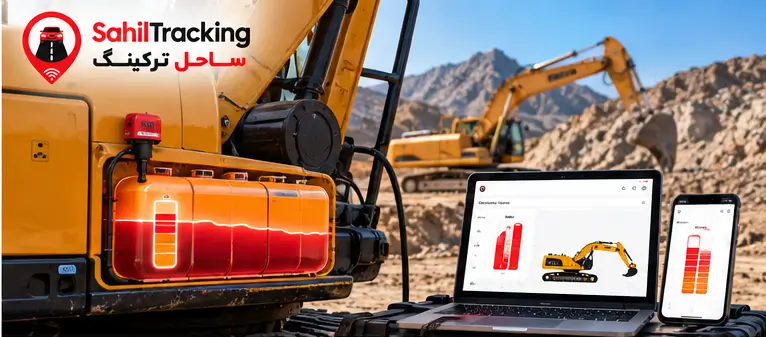
Fuel can represent a major operating cost in construction.
Construction fleets can consume fuel across:
- Trucks
- Excavators
- Loaders
- Bulldozers
- Generators
- Cranes
- Tankers
- Other diesel-powered machinery
This creates a management challenge.
Fuel receipts alone do not necessarily provide complete operational visibility.
A compatible fuel-monitoring system can provide additional information such as:
- Fuel level
- Fuel consumption
- Refueling
- Drainage
- Sudden fuel changes
- Historical fuel trends
Sahil Tracking’s fleet-management platform currently includes fuel consumption, refueling and drainage monitoring, idle-time tracking and fuel reports.
For construction companies operating many machines, connecting fuel information with vehicle or equipment activity can make anomalies easier to investigate.
7. Detect Unexpected Fuel Drainage
Consider this example.
A dump truck finishes work and remains parked overnight.
The tracking system shows:
Fuel before: 220 L
Fuel after: 165 L
But the vehicle has not completed a corresponding trip.
That difference deserves investigation.
A fuel-monitoring system integrated with GPS information can make it easier to compare fuel changes with:
- Vehicle location
- Movement
- Ignition
- Time
- Refueling
- Previous fuel levels
This is much more useful than looking at fuel information without operational context.
Sahil Tracking specifically includes refueling and drainage monitoring within its fuel-management feature set.
8. Monitor Generators with GPS and Fuel Monitoring
Construction projects don’t rely only on vehicles.
Generators can also be important assets, particularly where reliable grid electricity is unavailable.
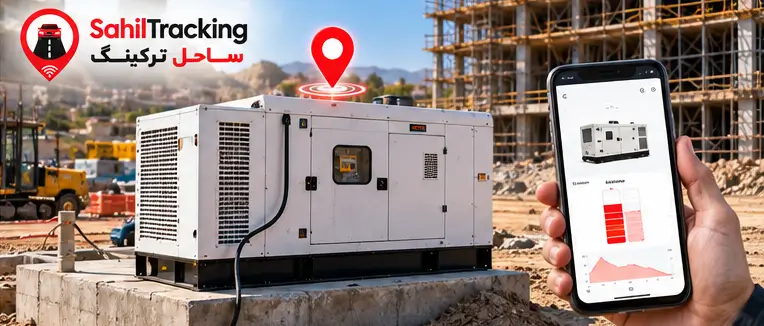
Depending on the generator and installed hardware, monitoring can include:
- Generator location
- Fuel level
- Refueling
- Fuel drainage
- Runtime
- Power-related status
- Maintenance information
This can be especially valuable when generators are distributed across multiple project sites.
Instead of depending exclusively on handwritten fuel records, managers can combine sensor information with digital reporting.
9. Create Geofences Around Construction Sites
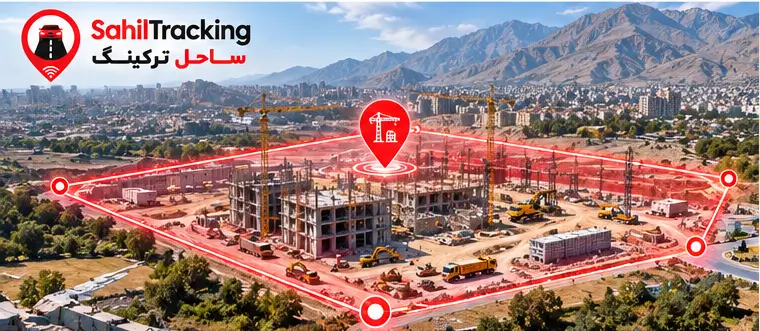
A geofence is a virtual boundary drawn around a real-world location.
For construction companies, a geofence can be created around:
- Project sites
- Equipment yards
- Warehouses
- Material storage areas
- Offices
- Workshops
- Restricted areas
The system can then identify when tracked vehicles enter or leave the defined area.
Sahil Tracking currently supports geofence entry and exit alerts.
Construction fleet systems also commonly use geofences to detect equipment movement outside approved job sites.
Example
Create a geofence around Construction Site A.
A dump truck leaves the site at 11:30 PM.
If that movement is unexpected, the fleet manager can investigate.
10. Reduce Unauthorized Vehicle and Equipment Use
Company vehicles and construction machinery should generally be used according to company policies and project requirements.
GPS tracking can help managers identify unusual activity such as:
- Movement outside working hours
- Unexpected weekend usage
- Vehicles leaving assigned areas
- Unauthorized routes
- Equipment moving between sites unexpectedly
Geofencing, movement information and trip history can provide context for investigating these events.
This is one reason equipment tracking is used as part of construction asset-security strategies.
11. Improve Construction Equipment Security
Construction equipment can be expensive and difficult to replace quickly.
GPS tracking cannot guarantee that theft will never happen.
However, it can add an important layer of visibility.
Managers can use compatible tracking systems to monitor:
Location
Where is the equipment?
Movement
Has it moved unexpectedly?
Geofence activity
Has it left the project site?
Ignition
Has the machine been started?
Power status
Has the tracking device lost external power?
Sahil Tracking’s current alert capabilities include ignition, geofence, route deviation and power-disconnection events.
12. Review Construction Vehicle Trip History
Live tracking answers:
Where is the vehicle now?
Trip history answers:
Where has the vehicle been?
For construction operations, historical information can be useful for reviewing:
- Material transport
- Site visits
- Supplier trips
- Vehicle movements
- Previous routes
- Stops
- Travel activity
If a project manager needs to investigate a vehicle’s activity from a previous day, trip history provides a digital record.
Sahil Tracking currently supports trip playback as part of its real-time GPS tracking functionality.
13. Monitor Construction Drivers
Heavy machinery is only one part of construction fleet management.
Drivers also matter.
Sahil Tracking’s platform currently monitors:
- Overspeeding
- Harsh braking
- Sudden acceleration
- Driver performance
It also includes idling information within its broader fleet-management functionality.
For construction companies, driver information can help managers identify behavior that may increase:
- Safety risk
- Fuel consumption
- Vehicle wear
- Maintenance requirements
The objective should be improving fleet safety and operational efficiency rather than simply collecting location information.
14. Maintenance Management for Construction Fleets
A construction vehicle breaking down at the wrong time can affect more than the vehicle itself.
If a dump truck fails, material movement may slow.
If an excavator is unavailable, earthworks can stop.
If a generator fails, work at a remote site may be interrupted.
Maintenance management therefore matters.
Sahil Tracking currently provides:
- Maintenance scheduling
- Service reminders
- Cost tracking
- Maintenance history
through its fleet-management platform.
Construction telematics can also use engine and equipment information to support more proactive maintenance planning.
15. Reduce Unexpected Downtime
There are two broad approaches to maintenance.
Reactive Maintenance
The machine fails.
Then the company repairs it.
Planned Maintenance
The company monitors usage and schedules servicing before predictable maintenance requirements are missed.
GPS and telematics data can support the second approach by giving managers better information about mileage, runtime and equipment activity.
This does not mean GPS technology can prevent every breakdown.
It means managers have better information for planning maintenance.
16. Track Dump Trucks
Dump trucks may make many trips between construction sites, quarries, suppliers and disposal areas.
GPS tracking can help monitor:
- Current truck location
- Routes
- Stops
- Speed
- Trip history
- Site arrival/departure
- Idle time
Geofences can also be placed around important locations.
For example:
Construction Site → Quarry → Construction Site
Managers can review whether trucks are operating on expected routes.
17. Track Excavators
Excavators may spend most of their working life inside construction sites rather than traveling long distances.
Therefore, their tracking requirements differ from normal road vehicles.
Useful information can include:
- Equipment location
- Engine status
- Operating hours
- Idle time
- Geofence status
- Fuel information
- Maintenance intervals
Modern heavy-equipment tracking systems commonly combine GPS location with engine-hour and utilization data.
18. Track Bulldozers and Loaders
Bulldozers and loaders may remain at one site for weeks or months.
That does not make tracking unnecessary.
Location is only one component.
Fleet managers may also want to understand:
- Whether the machine is being used
- Operating hours
- Idle time
- Fuel usage
- Unauthorized movement
- Maintenance requirements
This changes GPS tracking from a simple location tool into an equipment-management tool.
19. Track Cranes
Cranes are high-value construction assets.
Depending on the type of crane and compatible tracking hardware, telematics can help provide location, equipment activity and maintenance-related information.
For mobile cranes traveling between projects, real-time GPS location can also improve dispatching and coordination.
20. Track Construction Pickups and Support Vehicles
Construction companies often operate large numbers of support vehicles such as:
- Toyota Hilux
- Toyota Land Cruiser
- Toyota Corolla
- Toyota Hiace
- Service trucks
These vehicles move engineers, technicians, supervisors, tools and materials between projects.
For these vehicles, useful GPS features can include:
- Real-time location
- Speed monitoring
- Trip history
- Geofencing
- Driver behavior
- Route deviation
- Ignition alerts
- Maintenance reminders
Construction Fleet Management Across Multiple Project Sites
One of the strongest reasons to implement fleet management is centralized visibility.
Imagine a contractor operating:
Kabul Project
8 vehicles
3 excavators
2 generators
Kandahar Project
12 vehicles
4 loaders
5 generators
Herat Project
10 vehicles
2 excavators
6 dump trucks
Instead of maintaining completely separate manual records, a centralized fleet-management platform can bring tracked assets into one environment.
This can help managers compare:
- Vehicle activity
- Equipment utilization
- Fuel consumption
- Idle time
- Maintenance status
- Project-site activity
Construction fleet-management systems are specifically designed to help mixed fleets operate across multiple sites.
GPS Tracking for Remote Construction Projects in Afghanistan
Some construction projects operate far from a company’s main office.
Managers may not be able to physically visit every site every day.
Remote fleet visibility becomes especially useful in these circumstances.
A manager in Kabul may be able to review authorized tracking information from vehicles operating at another project site without depending entirely on phone calls.
However, there is an important technical point.
GPS positioning and cellular communication are different technologies.
The tracker may be able to calculate its location while temporarily being unable to send information to the server if cellular connectivity is unavailable.
For remote operations, companies should therefore ask their provider about:
- Cellular network compatibility
- Device memory
- Offline data storage
- Data synchronization after connectivity returns
- Hardware durability
- Power requirements
GPS Tracking vs Manual Construction Fleet Management
| Manual Management | GPS Fleet Management |
| Driver phone calls | Live vehicle location |
| Paper fuel records | Digital fuel information |
| Manual trip records | Trip history |
| Physical site checks | Remote monitoring |
| Manual service reminders | Maintenance scheduling |
| Limited equipment visibility | Centralized asset visibility |
| Manual working-hour records | Engine/runtime data where supported |
| Difficult site control | Geofencing |
| Separate reports | Centralized analytics |
GPS technology does not replace good project management.
It gives managers better operational information.
How GPS Tracking Can Help Control Construction Costs
Construction projects are highly cost-sensitive.
Small inefficiencies repeated across dozens of vehicles and machines can become significant.
GPS fleet management can help companies investigate and manage several cost areas.
Fuel
Monitor consumption, idling, refueling and drainage where compatible fuel hardware is installed.
Equipment Utilization
Identify equipment that is being used heavily and assets that may be underutilized.
Unauthorized Usage
Investigate unexpected movement outside working hours or assigned project areas.
Maintenance
Schedule servicing and maintain digital maintenance records.
Driver Behavior
Identify speeding, harsh braking and other monitored events.
Fleet Allocation
Use actual fleet information when deciding whether equipment should be transferred, rented or purchased.
This is why construction telematics is increasingly used for more than simply locating vehicles.
Important GPS Tracking Features for Construction Companies
When selecting GPS Tracking for Construction Companies in Afghanistan, look beyond basic map tracking.
A construction fleet-management solution may need:
Real-Time Tracking
See vehicles and equipment on a map.
Geofencing
Create virtual boundaries around construction sites.
Engine-Hour Monitoring
Monitor machine runtime where compatible hardware supports it.
Fuel Monitoring
Track fuel level, consumption, refueling and drainage with suitable sensors/integration.
Idle-Time Monitoring
Identify unnecessary engine idling.
Driver Monitoring
Review relevant driver-behavior events.
Trip History
Review previous vehicle movements.
Maintenance Management
Schedule service and maintain maintenance history.
Smart Alerts
Receive notifications for important events.
Reports & Analytics
Turn raw fleet data into useful operational information.
Choosing GPS Hardware for Construction Equipment
Construction environments can be harder on electronics than normal passenger-car environments.
Depending on the installation location and equipment type, a tracker may be exposed to:
- Dust
- Vibration
- Heat
- Cold
- Moisture
- Outdoor installation
- Electrical fluctuations
Hardware selection should therefore match the application.
A GPS tracker suitable for installation inside a passenger car may not necessarily be the right device for exposed heavy machinery.
Industry construction solutions commonly use ruggedized telematics hardware for harsh or external installations.
Ask your provider about the device’s environmental rating and installation requirements when tracking heavy equipment.
How to Choose a Construction Fleet Tracking Provider in Afghanistan
Before choosing a provider, ask:
- Can the system track both road vehicles and heavy equipment?
- Does it support real-time tracking?
- Can we create geofences around project sites?
- Can it monitor engine hours on compatible machines?
- Does it support fuel sensors?
- Can it monitor generators?
- What happens when cellular coverage is unavailable?
- Can we see all projects from one account?
- Can managers have different user permissions?
- Does it provide trip and fuel reports?
- Does it include maintenance management?
- Can it generate important alerts?
- Is professional installation available?
- What technical support is available?
- Can the platform scale when more equipment is added?
The cheapest tracker is not necessarily the lowest-cost solution.
Construction companies should evaluate the complete system:
Hardware + Installation + Connectivity + Platform + Sensors + Reports + Technical Support
Why Choose Sahil Tracking for Construction Fleet Management?
Sahil Tracking provides GPS tracking and fleet-management solutions for businesses operating in Afghanistan.
Its current fleet-management platform combines several capabilities relevant to construction operations:
Real-Time GPS Tracking
Monitor vehicle location, stops and movement.
Fuel Monitoring
Track fuel consumption, refueling, drainage and idle time with appropriate equipment.
Geofencing
Create virtual boundaries around project locations and monitor entry/exit events.
Driver Behavior
Monitor overspeeding, harsh braking, sudden acceleration and driver performance.
Smart Alerts
Monitor events including ignition, geofence activity, overspeeding, route deviation and power disconnection.
Reports & Analytics
Access trip, fuel, driver and vehicle-related reporting.
Maintenance Management
Schedule maintenance, create service reminders, track costs and maintain service history.
These capabilities are currently described on Sahil Tracking’s fleet-management platform.
Sahil Tracking also provides GPS tracking, fuel monitoring and broader fleet-management services through its Afghanistan operations.
Frequently Asked Questions
What is GPS tracking for construction companies?
GPS tracking for construction companies uses tracking devices and fleet-management software to monitor construction vehicles and equipment. Depending on hardware, it can provide information about location, trips, utilization, engine hours, fuel, geofences, driver activity and maintenance.
Can GPS trackers be installed on excavators?
Yes, suitable GPS or telematics hardware can be installed on many types of heavy equipment, including excavators. Hardware and installation should be selected according to the machine and operating environment.
Can GPS track bulldozers and loaders?
Yes. Heavy-equipment tracking systems can monitor the location and, with compatible hardware, operational information for bulldozers, loaders and other construction machinery.
Can we monitor generators?
Compatible GPS and sensor systems can be used to monitor generators. Available information depends on the generator, tracker and sensors installed.
Can GPS tracking monitor fuel?
Yes, when compatible fuel-sensing or vehicle-data hardware is integrated with the tracking platform. Sahil Tracking’s fleet platform supports fuel consumption, refueling, drainage and fuel reporting.
Can we know when equipment leaves a construction site?
Yes. A geofence can be created around a project site. A compatible fleet platform can then generate events when tracked equipment or vehicles cross the virtual boundary.
Can GPS tracking show engine hours?
Compatible telematics devices and machinery integrations can provide engine-runtime information. Availability depends on the machine and hardware.
Can construction vehicles be monitored from a mobile phone?
Modern fleet-management systems can provide remote access to tracking information. Exact mobile functionality depends on the platform being used.
Can one account monitor several construction projects?
Fleet-management platforms can organize multiple vehicles and equipment within a centralized system. User permissions and organizational structure depend on the specific platform configuration.
Does GPS tracking work without mobile coverage?
GPS positioning and mobile communication are separate. A tracker may continue determining its location but may be unable to send live information while cellular connectivity is unavailable. Some professional devices can store records and transmit them later, depending on hardware and configuration.
Can GPS tracking prevent equipment theft?
GPS tracking cannot guarantee theft prevention, but location monitoring, movement alerts and geofencing can improve visibility and help identify unauthorized equipment movement.
Take Control of Your Construction Fleet
Construction companies invest heavily in vehicles, machinery, fuel and equipment.
Without reliable information, it can be difficult to know whether those assets are being used efficiently.
GPS Tracking for Construction Companies in Afghanistan gives managers a better way to understand what is happening across their fleet and project sites.
Instead of relying only on calls, paper records and manual reports, companies can use digital fleet information to monitor:
Vehicles. Heavy equipment. Fuel. Drivers. Project sites. Maintenance.
For a small contractor, that might mean tracking several pickups and an excavator.
For a large construction company, it might mean managing hundreds of vehicles, machines and generators across multiple projects.
The objective is the same:
Better visibility. Better control. Better operational decisions.
Sahil Tracking provides GPS tracking and fleet-management solutions that can bring construction fleet information into one centralized platform.