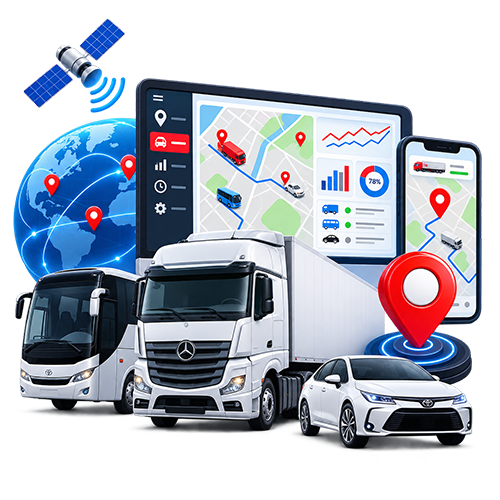
Fleet Management in Afghanistan is becoming essential for businesses, government teams, NGOs, logistics companies, construction firms, and taxi operators that rely on vehicles every day. Moreover, as transportation demands continue to grow, teams need smarter ways to monitor vehicles, improve driver safety, reduce fuel costs, and increase daily efficiency. Modern GPS technology makes Fleet Management in Afghanistan more efficient by providing real-time vehicle tracking, intelligent reporting, and complete visibility over fleet operations.

In Afghanistan, managing fleets has become more often challenging. For example, rising fuel costs, long travel distances, difficult road conditions, vehicle theft, unauthorized vehicle use. It also increasing customer expectations require teams to manage their fleets with greater precision than ever before.
Traditional fleet management methods – such as handwritten logbooks, manual phone calls with drivers, and paper-based reports – are no longer sufficient. As a result, they often lead to delayed decision-making, inaccurate information, higher operating costs, and reduced productivity.
Modern GPS fleet management solves these challenges by giving teams complete visibility into their vehicle operations. Managers can see where every vehicle is located, monitor driver behavior, review completed trips, receive instant alerts, analyze fuel consumption. In addition, it also generate detailed reports from a single dashboard.
Fleet management is no longer limited to large multinational corporations. Today, businesses of every size can benefit from affordable GPS technology and cloud-based software. Whether a company manages five vehicles or five thousand, a modern fleet management system provides the tools needed to improve safety, reduce costs. It also increase daily efficiency.
For teams operating in Afghanistan, fleet management also plays an important role in improving security. Therefore, vehicles often travel through remote locations where communication can be limited. Real-time tracking ensures that managers always know the location of their assets and can respond quickly to emergencies or unexpected situations.
At Sahil Tracking, we believe technology should make transportation safer, smarter, and more efficient. Meanwhile, our fleet management platform combines advanced GPS tracking, intelligent reporting, mobile applications, and powerful analytics to help teams improve their daily operations. From small businesses to nationwide fleets, our solutions are designed to support the growing transportation needs of Afghanistan.
This detailed guide explains every aspect of modern fleet management. In practice, by the end of this article, you will understand how GPS tracking works, why fleet management is essential for modern teams. It also how the right technology can greatly reduce costs while improving productivity and customer satisfaction.
What Is Fleet Management?
Fleet management is the organized process of supervising, monitoring, maintaining, and optimizing a group of vehicles used by an team. For this reason, it involves much more than simply knowing where a vehicle is located. A complete fleet management strategy includes vehicle tracking, driver supervision, maintenance scheduling, fuel management, route planning, compliance monitoring, performance analysis, and cost control.
The goal of fleet management is to ensure that every vehicle operates safely, efficiently, and economically throughout its lifecycle. Instead of reacting to problems after they occur, teams can use real-time information to make informed decisions that prevent delays, reduce daily expenses. It also improve overall performance.
Modern fleet management systems combine GPS technology, cloud computing, mobile communication, and intelligent software to provide a complete view of fleet operations. Moreover, every vehicle equipped with a GPS tracking device continuously transmits information such as its location, speed, direction of travel, ignition status, and movement history. This information is securely processed by the fleet management platform and presented through interactive dashboards, maps, and reports.
Fleet management is not limited to transportation companies. For example, government ministries, humanitarian teams, hospitals, schools, construction companies, mining operations, utility providers. It also delivery services all rely on effective fleet management to maintain daily efficiency and accountability.
For example, a logistics company can use GPS tracking to ensure deliveries arrive on time. As a result, at the same time, a construction company can monitor heavy equipment working across multiple project sites. An NGO can verify that vehicles assigned to humanitarian projects are operating within approved areas. It also a taxi company can dispatch the nearest available driver to reduce passenger waiting times.
In addition, a professional fleet management platform turns vehicles into connected assets that continuously provide valuable daily data. This data helps managers improve productivity, reduce unnecessary expenses, strengthen security, and make strategic decisions based on measurable performance rather than assumptions.
Why Fleet Management in Afghanistan Is Important
Afghanistan’s transportation sector has changed greatly in recent years. However, businesses are expanding their operations across provinces, government teams are modernizing public transportation systems, NGOs continue to support humanitarian projects in remote areas. It also taxi and delivery services are becoming more technology-driven. As vehicle fleets grow, so does the complexity of managing them efficiently.
Therefore, for many teams, vehicles are among their most valuable assets. A single commercial vehicle represents a significant investment, and a large fleet can be worth millions of dollars. Without an effective management system, teams often struggle with rising fuel expenses, unauthorized vehicle use, delayed deliveries, maintenance issues, and limited visibility into daily operations.
Meanwhile, one of the biggest challenges in Afghanistan is geography. Vehicles frequently travel long distances between provinces, often through mountainous terrain and remote regions where direct supervision is impossible. Managers cannot physically monitor every vehicle, making GPS-based fleet management an essential tool rather than a luxury.
In practice, fuel costs are another major concern. Even small improvements in fuel efficiency can result in large savings over a year. Excessive idling, harsh acceleration, speeding, and unauthorized trips all increase fuel consumption. For this reason, with a fleet management platform, managers can identify these behaviors and take corrective action before costs continue to rise.
Security is equally important. Vehicle theft, unauthorized use, and loss of valuable cargo can have serious financial consequences. Similarly, real-time GPS tracking allows teams to know exactly where each vehicle is located at any moment. If a vehicle deviates from its assigned route or enters an unauthorized area, managers receive immediate alerts and can respond quickly.
Government agencies and NGOs face extra responsibilities. Moreover, they must show accountability, ensure vehicles are used for approved purposes, and maintain accurate daily records. A professional fleet management system provides detailed reports that simplify auditing, budgeting, and compliance.
Customers also expect faster and more reliable service than ever before. Whether transporting passengers, delivering goods, or providing emergency services, teams need accurate information about vehicle locations and estimated arrival times. Fleet management technology enables dispatchers to make informed decisions and improve customer satisfaction.
As Afghanistan continues to invest in transportation infrastructure and digital transformation, fleet management is becoming a competitive advantage. As a result, teams that adopt modern GPS tracking solutions can reduce operating costs, improve safety, increase productivity, and make better strategic decisions based on real-time data.
How Fleet Management in Afghanistan Uses GPS Vehicle Tracking
GPS, or the Global Positioning System, is a satellite-based navigation technology that allows vehicles to find their precise location anywhere with a clear view of the sky. Originally developed for navigation purposes, GPS has become the foundation of modern fleet management systems used around the world.
In addition, a GPS fleet management solution consists of several integrated components working together to provide real-time visibility into vehicle operations.
GPS Tracking Device
The GPS tracker is installed inside the vehicle and serves as the primary source of daily data. Modern trackers are compact, reliable, and capable of collecting much more than simple location information.
However, depending on the model, a GPS tracker can monitor:
- Vehicle location
- Speed
- Direction of travel
- Ignition status
- Engine running time
- Battery voltage
- Driver identification
- Fuel sensor data
- Temperature sensors
- Door sensors
- Panic buttons
- Digital and analog inputs
- CAN Bus information
The tracker continuously gathers this information while the vehicle is operating.
Satellite Communication
GPS satellites orbit the Earth and continuously transmit positioning signals. Therefore, a GPS tracker receives signals from multiple satellites simultaneously and calculates its exact location using trilateration. Modern receivers are highly accurate and can find a vehicle’s position within a few meters under normal conditions.
Contrary to popular belief, GPS satellites only provide positioning information. Meanwhile, they do not send data directly to your computer or mobile phone.
Mobile Network Transmission
Once the tracker determines the vehicle’s location, it sends the collected information through a mobile data network using a SIM card installed inside the device.
Depending on network availability, trackers may use:
- 2G
- 3G
- 4G LTE
- LTE Cat M1
- In practice, nB-IoT
In Afghanistan, 4G-enabled trackers are becoming more often popular because they provide faster communication and better long-term compatibility with mobile networks.
Cloud Fleet Management Platform
The sent data is securely received by a cloud-based fleet management server. For this reason, this platform processes millions of location updates every day and converts raw GPS information into meaningful insights.
Instead of viewing complex coordinates, users see intuitive dashboards displaying:
- Live vehicle maps
- Current vehicle status
- Trip history
- Driver performance
- Fuel consumption
- Maintenance reminders
- Alerts and notifications
- Reports and analytics
Cloud technology ensures that authorized users can access the platform from anywhere with an internet connection.
Web Dashboard
Similarly, the web dashboard acts as the central control center for fleet managers. It allows teams to monitor every vehicle from a single interface.
Typical dashboard features include:
- Interactive maps
- Vehicle grouping
- Search tools
- Custom reports
- Geofences
- User management
- Notification center
- Maintenance schedules
- Historical playback
- Driver scorecards
Moreover, managers can quickly identify vehicles that require attention without contacting drivers individually.
Mobile Application
Today’s fleet managers are not always in the office. Mobile applications provide access to the same essential information from smartphones and tablets.

For example, through the mobile app, users can:
- View live vehicle locations
- Receive instant alerts
- Review recent trips
- Check vehicle status
- Search vehicles
- Navigate to vehicle locations
- Share live tracking links
- Generate quick reports
This flexibility ensures that fleet operations continue even when managers are traveling.
Key Components of Fleet Management in Afghanistan
An effective fleet management platform is much more than a GPS map. As a result, it combines multiple technologies into one integrated solution.
Real-Time Vehicle Tracking
Managers can instantly locate every vehicle and monitor ongoing operations without making phone calls to drivers.
Trip History
Every completed journey is automatically recorded, allowing teams to review routes, stops, travel time, and total distance.
In addition, geofencing
Virtual boundaries can be created around offices, warehouses, project sites, customer locations, or provincial borders. The system automatically generates alerts whenever vehicles enter or leave designated areas.
Fuel Monitoring
However, fuel sensors and intelligent analytics help teams monitor consumption, detect possible fuel theft, and improve overall fuel efficiency.
Driver Performance Monitoring
Driving habits such as speeding, harsh braking, rapid acceleration, excessive idling. It also sharp cornering can all be measured to improve road safety and reduce maintenance costs.
Maintenance Management
Therefore, scheduled maintenance reminders based on mileage, engine hours, or time intervals help prevent costly breakdowns and extend vehicle lifespan.
Alerts and Notifications
Instant notifications inform managers about important events such as overspeeding, ignition changes, unauthorized movement, low battery voltage, geofence violations, or emergency situations.
Reporting and Analytics
Powerful reporting tools transform raw GPS data into valuable business intelligence that supports daily improvements and strategic planning.
How Fleet Management in Afghanistan Improves Business Operations
Meanwhile, real-time vehicle tracking is the foundation of every modern fleet management system. It not only allows teams to view the live location and status of every vehicle from a centralized dashboard. However, it also eliminates the need for phone calls, manual updates, and paper records. As a result, fleet managers can respond more quickly and make informed decisions based on real-time information.
Furthermore, for businesses operating multiple vehicles across Afghanistan, real-time visibility creates a significant daily advantage. Whether vehicles are traveling between Kabul, Kandahar, Herat, Mazar-e-Sharif, Jalalabad, Kunduz, or remote districts, managers always know where their assets are. For this reason, consequently, they can improve routes, respond to unexpected situations, improve customer service, and increase overall daily efficiency.
Without GPS tracking, dispatchers often spend valuable time contacting drivers to ask for their location or estimated arrival time. This process delays operations and increases communication costs. Similarly, with a fleet management platform, vehicle locations are updated automatically, allowing dispatchers to assign the closest available vehicle to a new job within seconds.
Faster Dispatching
For example, imagine a logistics company receives an urgent delivery request. Instead of calling multiple drivers to find the nearest vehicle, the dispatcher simply opens the Sahil Tracking dashboard. Moreover, within seconds, the system identifies the closest available vehicle using real-time GPS tracking. As a result, the dispatcher assigns the job immediately, reducing response time and improving customer satisfaction. Moreover, the faster dispatch process helps the company complete more deliveries while using its fleet more efficiently.
For example, for taxi operators, this means passengers wait less time for their ride. For emergency response teams, it can mean reaching a location several minutes earlier—time that may save lives.
Better Customer Service
Modern customers expect accurate information. As a result, they want to know when a delivery will arrive, when a technician will reach their location, or how long they must wait for transportation.
Real-time tracking allows teams to provide precise updates based on actual vehicle locations instead of estimates. This builds trust and reduces customer complaints.
Improved Operational Visibility
In addition, managers can instantly identify:
- Vehicles currently in operation
- Vehicles parked or idle
- Vehicles traveling outside assigned areas
- Vehicles exceeding speed limits
- Vehicles with ignition switched on after working hours
- Vehicles requiring immediate attention
Instead of reacting to problems after they occur, teams can take corrective action while operations are still in progress.
Enhanced Decision-Making
Accurate information leads to better decisions.
For example, if traffic congestion develops on a major highway, dispatchers can redirect vehicles using alternative routes before delays become significant. If one driver experiences a mechanical issue, the nearest available vehicle can be reassigned to continue the delivery schedule.
This level of flexibility improves efficiency across the entire team.
Fuel Monitoring in Fleet Management in Afghanistan
Therefore, fuel is often the largest operating expense for teams that manage vehicle fleets. Even a small reduction in unnecessary fuel consumption can produce significant annual savings.
However, many teams struggle to understand exactly how fuel is being used. Meanwhile, without reliable data, it becomes difficult to identify waste, inefficiency, or unauthorized fuel consumption.

A professional fleet management system provides detailed fuel insights that help managers improve consumption and reduce operating costs.
Why Fuel Costs Continue to Rise
Several common factors contribute to excessive fuel usage:
- Long periods of engine idling
- Aggressive acceleration
- Excessive speeding
- Poor route planning
- Unauthorized personal trips
- Vehicle overloading
- Poor maintenance
- Fuel theft
- Traffic congestion
In practice, while some of these factors are unavoidable, many can be controlled through better management and accurate data.
Monitoring Fuel Consumption
Modern GPS tracking devices can integrate with fuel sensors or use intelligent algorithms to estimate fuel usage based on vehicle movement and engine performance.
Managers can monitor:
- Daily fuel consumption
- Weekly fuel usage
- Monthly fuel trends
- Fuel efficiency
- Distance per liter
- Idle fuel consumption
- Refueling events
- Fuel level changes
For this reason, historical reports help teams compare vehicle performance and identify unusual patterns.
Detecting Fuel Theft
Fuel theft remains a challenge for many teams.
Examples include:
- Unauthorized fuel removal from parked vehicles
- False fuel reimbursement claims
- Unapproved refueling
- Fuel purchased but not added to the vehicle
- Fuel transferred to another vehicle
Similarly, a fleet management platform can detect sudden drops in fuel level and immediately notify managers. Combined with GPS location and time information, these alerts provide valuable evidence for investigating suspicious activities.
Reducing Fuel Expenses
teams that actively monitor fuel usage often achieve measurable savings by:
- Eliminating unnecessary idling
- Reducing unauthorized trips
- Improving route planning
- Encouraging smoother driving habits
- Scheduling preventive maintenance
- Monitoring driver performance
- Detecting abnormal fuel usage
Moreover, these improvements not only reduce costs but also decrease environmental impact and extend vehicle lifespan.
Driver Behavior Monitoring for Fleet Management in Afghanistan
Drivers play a critical role in fleet performance. Two drivers operating identical vehicles on the same route can produce very different results in terms of fuel consumption, maintenance costs, and safety.
For example, driver behavior monitoring helps teams understand how vehicles are being driven and identify opportunities for improvement.

Common Driving Behaviors That Increase Costs
Unsafe or inefficient driving habits include:
- Harsh acceleration
- Sudden braking
- Rapid cornering
- Excessive speeding
- Long idle periods
- Driving outside approved working hours
- Unauthorized vehicle usage
Each of these behaviors increases fuel consumption, accelerates vehicle wear, and raises the likelihood of accidents.
Building a Safer Driving Culture
As a result, the purpose of driver monitoring is not to punish employees. Instead, it provides objective information that supports coaching and continuous improvement.
teams can use driver scorecards to recognize safe drivers, identify training needs, and encourage responsible driving practices.
In addition, benefits include:
- Fewer accidents
- Lower insurance costs
- Reduced maintenance expenses
- Better fuel efficiency
- Improved customer satisfaction
- Longer vehicle lifespan
When drivers understand that performance is measured fairly using reliable data, they are often more motivated to follow company policies.
Route Optimization for Fleet Management in Afghanistan
Every unnecessary kilometer increases fuel consumption, labor costs, and vehicle wear. However, route improvement helps teams select the most efficient path between destinations.
A fleet management platform analyzes vehicle locations, travel history, traffic conditions, and daily needs to improve routing decisions.
Advantages of Route Optimization
teams can:
- Reduce travel distance
- Lower fuel consumption
- Improve delivery schedules
- Increase daily productivity
- Reduce overtime
- Improve customer satisfaction
Therefore, for delivery companies, route improvement may allow extra deliveries without increasing fleet size.
For taxi operators, drivers spend less time searching for passengers.
For NGOs, vehicles reach project sites more efficiently.
Meanwhile, for government agencies, transportation resources are used more effectively.
Route improvement benefits every team that depends on vehicle movement.
Geofencing: Creating Virtual Boundaries

Geofencing allows teams to create virtual geographic boundaries around important locations.
In practice, these boundaries can include:
- Company offices
- Warehouses
- Fuel stations
- Construction sites
- Schools
- Hospitals
- Government facilities
- Provincial borders
- Customer locations
Whenever a vehicle enters or exits a defined area, the fleet management system automatically records the event and can generate an instant notification.
Practical Uses of Geofencing
Geofencing helps teams:
- Verify deliveries
- Monitor working hours
- Prevent unauthorized vehicle use
- Improve security
- Track project activity
- Measure arrival and departure times
- Automate attendance records
- Simplify reporting
For example, a logistics company can automatically record when a truck arrives at a warehouse, eliminating the need for manual time logging.
Similarly, an NGO can confirm that field vehicles visited approved project locations, providing transparent records for donors and project managers.
Vehicle Maintenance in Fleet Management in Afghanistan
One of the most overlooked aspects of fleet management is preventive maintenance. Similarly, many teams only repair vehicles after a breakdown occurs. While this approach may appear to reduce short-term costs, it often results in expensive repairs, longer vehicle downtime, delayed operations, and reduced vehicle lifespan.
A modern fleet management platform changes this approach by helping teams maintain vehicles before problems become serious.
Why Preventive Maintenance Matters
Moreover, every vehicle contains hundreds of mechanical components that gradually wear out through daily use. Engine oil degrades, brake pads wear down, tires lose tread, batteries weaken, and filters become clogged. Ignoring these routine maintenance tasks can eventually lead to engine failure, transmission damage, brake problems, or roadside breakdowns.
For example, preventive maintenance ensures that small issues are identified and resolved before they become major repairs.
For teams managing dozens or hundreds of vehicles, preventive maintenance reduces unexpected downtime and improves fleet reliability.
Maintenance Scheduling
Fleet management software allows teams to schedule maintenance based on several factors:
- Total mileage
- Engine operating hours
- Calendar dates
- Manufacturer recommendations
- Custom maintenance intervals
As a result, managers receive automatic reminders before maintenance becomes overdue, allowing repairs to be planned without disrupting daily operations.
For example, instead of waiting until a vehicle breaks down during a long journey between provinces, maintenance can be completed during scheduled service periods.
Digital Maintenance Records
Traditional maintenance logs are often paper-based and difficult to manage. In addition, modern fleet management systems maintain complete digital service histories for every vehicle.
These records typically include:
- Service dates
- Repair descriptions
- Parts replaced
- Maintenance costs
- Workshop information
- Next scheduled service
- Warranty details
Having complete maintenance histories simplifies budgeting, auditing, and resale planning.
Extending Vehicle Lifespan
However, teams invest significant amounts of money in purchasing vehicles. Proper maintenance protects that investment by extending the useful life of each vehicle.
Well-maintained vehicles typically provide:
- Better fuel efficiency
- Improved safety
- Lower repair costs
- Reduced downtime
- Higher resale value
- Increased operational reliability
Therefore, preventive maintenance is therefore not an expense—it is a long-term investment in daily efficiency.
Fleet Reports and Business Analytics

Fleet management generates thousands of data points every day. Without proper reporting tools, this information has limited value. Meanwhile, advanced analytics transform raw vehicle data into actionable business intelligence.
Reports allow managers to evaluate performance objectively rather than relying on assumptions or incomplete information.
Daily Operational Reports
Daily reports provide a clear overview of fleet activity, including:
- Total distance traveled
- Number of completed trips
- Working hours
- Vehicle utilization
- Idle time
- Overspeed events
- Driver activity
- Fuel consumption
In practice, these reports help supervisors identify unusual activity immediately.
Weekly and Monthly Reports
Long-term reports reveal daily trends that are difficult to identify from daily data alone.
Managers can compare:
- Fuel costs
- Maintenance expenses
- Driver performance
- Vehicle utilization
- Route efficiency
- Operational productivity
For this reason, trend analysis supports better planning and budgeting decisions.
Driver Performance Reports
Driver scorecards help teams measure driving quality using objective criteria.
Typical indicators include:
- Average speed
- Harsh braking
- Rapid acceleration
- Excessive idling
- Overspeed incidents
- Trip completion
- Fuel efficiency
Similarly, recognizing high-performing drivers encourages safer driving throughout the team.
Executive Dashboards
Senior management often requires summary information rather than detailed daily reports.
Executive dashboards display key performance indicators (KPIs) such as:
- Fleet availability
- Active vehicles
- Average fuel consumption
- Maintenance compliance
- Daily mileage
- Driver safety score
- Overall fleet productivity
Moreover, these dashboards enable faster strategic decision-making.
Vehicle Security in Fleet Management in Afghanistan
Vehicle theft remains a serious concern for businesses in many regions. Losing a commercial vehicle can disrupt operations, delay customer deliveries, and result in large financial losses.
For example, gPS fleet management provides several layers of protection that improve vehicle security.
Real-Time Location
The most basic security feature is continuous location monitoring.
Managers always know:
- Current vehicle location
- Last known position
- Direction of travel
- Current speed
- Ignition status
As a result, if a vehicle is moved without authorization, managers receive immediate notifications.
Unauthorized Movement Alerts
Vehicles can be monitored outside normal working hours.
For example:
- Ignition turned on at midnight
- Vehicle leaving company premises on weekends
- Unauthorized movement during holidays
In addition, automatic alerts allow security personnel to respond quickly.
Geofence Security
teams can create secure geofences around:
- Parking areas
- Company compounds
- Warehouses
- Government facilities
Whenever a vehicle leaves these protected areas unexpectedly, an alert is generated instantly.
Recovery Assistance
However, although GPS tracking cannot physically stop vehicle theft, it greatly improves recovery efforts.
Accurate location information helps teams:
- Share vehicle location with law enforcement
- Track movement in real time
- Reduce search time
- Increase recovery probability
Fast response often determines whether a stolen vehicle can be recovered successfully.
Fleet Management for Non-Governmental Organizations (NGOs)
Therefore, many NGOs operate vehicle fleets across Afghanistan to deliver humanitarian help, healthcare, education, food distribution, and emergency response.
Managing these vehicles efficiently is essential for both daily success and donor accountability.
Accountability
Meanwhile, donors more often expect transparent reporting.
GPS fleet management provides reliable records showing:
- Vehicle routes
- Project visits
- Travel duration
- Fuel usage
- Driver activity
This information demonstrates that resources are being used appropriately.
Staff Safety
In practice, field teams often travel to remote locations.
Real-time tracking improves staff safety by allowing headquarters to monitor vehicle movement and respond quickly during emergencies.
Operational Efficiency
NGOs can improve vehicle assignments, reduce unnecessary travel, and improve coordination between regional offices.
For this reason, better planning allows teams to serve more communities without increasing transportation costs.
Fleet Management for Government Organizations
Government agencies frequently manage hundreds or thousands of vehicles across multiple departments.
Examples include:
- Transport authorities
- Municipal services
- Public works departments
- Emergency services
- Utility companies
- Regulatory agencies
Similarly, managing these fleets manually becomes more often difficult as operations expand.
Improving Transparency
GPS tracking increases public accountability by providing objective daily records.
Government managers can verify:
- Official vehicle usage
- Working hours
- Route compliance
- Fuel consumption
- Maintenance schedules
Moreover, transparent reporting reduces misuse of public resources.
Supporting National Transportation Programs
Fleet management platforms can support large-scale transportation initiatives by providing centralized monitoring for thousands of vehicles.
teams can monitor compliance, improve road safety, and generate national-level transportation statistics that support policy decisions.
Fleet Management for Logistics Companies
For example, logistics companies depend on efficient transportation to remain competitive.
Late deliveries, inefficient routing, fuel waste, and poor communication directly affect profitability.
GPS fleet management provides logistics companies with tools to improve every stage of the delivery process.
Delivery Tracking
As a result, managers know exactly where shipments are throughout the journey.
Customers receive more accurate delivery updates, improving satisfaction and reducing support requests.
Fleet Utilization
Instead of purchasing extra vehicles, many logistics companies first improve use of their existing fleet.
In addition, data-driven scheduling allows more deliveries using the same number of vehicles.
Warehouse Coordination
Real-time vehicle tracking improves communication between drivers and warehouses.
Loading teams know when vehicles will arrive, reducing waiting time and increasing daily efficiency.
Customer Confidence
However, businesses more often prefer logistics providers that offer shipment visibility.
Real-time GPS tracking demonstrates professionalism and builds long-term customer trust.
Fleet Management for Taxi Companies
The taxi industry has undergone a major transformation over the last decade. Therefore, customers now expect quick bookings, accurate arrival times, transparent fares, and safe journeys. Managing a taxi fleet without GPS technology has become more often difficult because passengers demand real-time information and efficient service.
Fleet management software provides taxi companies with complete visibility over their operations. Meanwhile, dispatchers to assign the nearest available vehicle, reduce passenger waiting times, and improve overall customer satisfaction.
For taxi operators in Afghanistan, where urban traffic conditions and road infrastructure vary greatly from city to city, GPS tracking provides a competitive advantage. Instead of relying on radio communication or manual dispatching, operators can make decisions using live vehicle data.
Intelligent Taxi Dispatch
In practice, one of the greatest advantages of fleet management is intelligent dispatching. When a passenger requests a taxi, the system automatically identifies the closest available driver.
This process reduces:
- Customer waiting time
- Driver travel distance
- Fuel consumption
- Empty vehicle movement
- Traffic congestion
For this reason, passengers receive faster service while drivers complete more trips during each working day.
Driver Performance
Taxi companies depend heavily on driver professionalism.
Fleet management software allows operators to monitor:
- Working hours
- Passenger trip history
- Speed violations
- Harsh braking
- Rapid acceleration
- Excessive idling
- Route deviations
Similarly, this information helps maintain high service standards while encouraging safer driving.
Passenger Safety
Modern taxi platforms include several safety features.
These include:
- Live trip tracking
- Emergency alerts
- Driver identification
- Trip history
- Route verification
- SOS notifications
Moreover, these features increase passenger confidence while improving overall service quality.
Fleet Management for Construction Companies
Construction companies often manage a wide range of assets, including pickup trucks, heavy machinery, excavators, cranes, dump trucks, generators, and support vehicles.
Unlike delivery companies, construction fleets operate across multiple project sites that frequently change location. For example, managing these assets manually often results in equipment misuse, delayed projects, and higher operating costs.
GPS fleet management gives construction managers complete visibility into vehicle and equipment activity.
Equipment Utilization
Many teams purchase extra equipment without realizing that existing assets are underutilized.
As a result, fleet reports help answer important questions:
- Which machines are being used most frequently?
- Which vehicles remain idle?
- In addition, which project requires extra equipment?
- Which assets require maintenance?
Better visibility allows teams to maximize the value of existing equipment before investing in new machinery.
Project Monitoring
However, managers can monitor:
- Arrival time
- Departure time
- Working hours
- Equipment movement
- Engine hours
- Idle time
This information helps improve project planning and resource allocation.
Cost Control
Construction projects often operate under strict budgets.
Therefore, gPS tracking helps reduce:
- Unauthorized equipment usage
- Fuel waste
- Vehicle abuse
- Unnecessary overtime
- Maintenance expenses
Accurate daily data supports better financial management throughout the project lifecycle.
Fleet Management for Mining Operations
Mining operations often take place in isolated areas where equipment reliability and daily safety are extremely important.
Meanwhile, heavy vehicles operate continuously under difficult conditions.
GPS tracking provides valuable daily insights including:
- Equipment location
- Working hours
- Route history
- Maintenance requirements
- Fuel consumption
- Operator performance
Mining companies can improve productivity while reducing daily risks.
Fleet Management for Healthcare Organizations
In practice, hospitals, clinics, medical suppliers, and emergency response teams rely on transportation to deliver essential healthcare services.
Ambulances must respond rapidly.
Medical supplies must arrive safely.
For this reason, healthcare professionals must travel efficiently.
Fleet management technology supports these objectives through improved vehicle coordination.
Ambulance Tracking
Emergency dispatch centers can immediately identify the nearest available ambulance.
Similarly, this reduces response time and improves patient care.
Medical Supply Distribution
GPS tracking ensures:
- Temperature-sensitive deliveries remain on schedule.
- Moreover, vehicles follow approved routes.
- Deliveries reach healthcare facilities on time.
Reliable transportation supports better healthcare outcomes.
Fleet Management for Educational Institutions
For example, schools and universities operating buses have an important responsibility to transport students safely.
Parents more often expect greater transparency regarding school transportation.
Fleet management software provides:
- Live school bus tracking
- Route optimization
- Arrival notifications
- Driver monitoring
- Safety reports
As a result, parents gain peace of mind while schools improve daily efficiency.
Artificial Intelligence in Fleet Management
Artificial Intelligence (AI) is transforming fleet management from reactive monitoring into predictive decision-making.
Instead of simply showing where vehicles are located, AI analyzes millions of data points to identify patterns and recommend improvements.
In addition, future AI-powered fleet systems will automatically predict:
- Maintenance requirements
- Fuel consumption
- Driver risk
- Route efficiency
- Vehicle utilization
- Traffic delays
teams will more often rely on predictive analytics rather than historical reporting.
Predictive Maintenance
Artificial Intelligence can identify early warning signs before mechanical failures occur.
Instead of repairing vehicles after breakdowns, teams receive recommendations for preventive maintenance.
Benefits include:
- Lower repair costs
- Less downtime
- Improved reliability
- Longer vehicle lifespan
Internet of Things (IoT)
Modern GPS tracking is part of the larger Internet of Things ecosystem.
Therefore, vehicles communicate continuously with cloud platforms using connected sensors.
IoT devices may monitor:
- Fuel level
- Tire pressure
- Temperature
- Engine diagnostics
- Door status
- Cargo condition
- Driver identification
These connected technologies create smarter transportation systems.
Choosing the Right Fleet Management Provider
Meanwhile, selecting the right GPS tracking company is one of the most important decisions an team can make.
Many businesses focus only on device price.
However, long-term success depends on much more than hardware.
Important Factors
In practice, when evaluating a provider, consider:
Platform Reliability
Can the platform operate continuously without downtime?
Local Support
Does the provider offer installation, maintenance, and technical help inside Afghanistan?
For this reason, scalability
Can the system support fleet growth from 10 vehicles to thousands of vehicles?
Reporting
Similarly, does the platform provide professional reports that support daily decision-making?
Mobile Applications
Can managers monitor vehicles from anywhere?
Security
Moreover, is fleet data stored securely?
Future Development
Does the provider regularly improve the platform with new features?
Selecting a long-term technology partner often provides greater value than choosing the lowest-cost solution.
Why Choose Sahil Tracking for Fleet Management in Afghanistan
For example, choosing the right fleet management provider is about more than buying a GPS tracker. It is about partnering with a company that understands your daily challenges and provides technology that helps your team grow. Sahil Tracking is committed to delivering reliable GPS tracking solutions that improve efficiency, enhance security, and simplify fleet management for teams across Afghanistan.
As a result, our platform is designed to support businesses of every size—from companies with a handful of vehicles to teams managing thousands of assets nationwide.
Advanced GPS Tracking Technology
Sahil Tracking uses modern GPS tracking technology to provide accurate, real-time vehicle monitoring. Managers can instantly locate vehicles, review trip history, receive alerts, and generate detailed reports through an easy-to-use web platform and mobile application.
In addition, the system supports a wide range of commercial GPS devices, allowing teams to choose hardware that best suits their daily needs.
Fleet Management Designed for Afghanistan
Operating a fleet in Afghanistan presents unique challenges. Long travel distances, varying road conditions, mountainous terrain, and remote project locations require a platform that remains reliable under demanding conditions.
However, sahil Tracking is designed with these realities in mind. teams can monitor vehicles operating across provinces, improve communication with drivers, and maintain visibility even when vehicles travel long distances.
Powerful Reporting
Business decisions should be based on reliable information rather than assumptions.
Therefore, the Sahil Tracking platform provides detailed reports covering:
- Daily vehicle activity
- Driver performance
- Fuel consumption
- Vehicle utilization
- Idle time
- Overspeed incidents
- Maintenance schedules
- Trip history
- Geofence events
These reports help teams identify opportunities to improve efficiency and reduce operating costs.
Mobile Access Anywhere
Modern managers are rarely confined to an office.
Meanwhile, our mobile application allows authorized users to monitor vehicles, receive alerts, and review daily data from virtually anywhere.
Whether you are attending meetings, visiting project sites, or traveling between provinces, your fleet remains within reach.
Scalable for Growing Organizations
Many businesses begin with only a few vehicles but expand rapidly over time.
In practice, sahil Tracking is built to scale with your team. The same platform can support small business fleets as well as large government or enterprise deployments.
This eliminates the need to replace systems as your team grows.
Professional Customer Support
For this reason, technology is only valuable when it is supported by knowledgeable professionals.
Our team assists customers with:
- Device installation
- Platform configuration
- User training
- Technical support
- Troubleshooting
- Ongoing consultation
Our goal is to ensure every customer receives maximum value from the platform.
Frequently Asked Questions
1. What Is Fleet Management in Afghanistan?
Fleet management is the process of managing company vehicles using technology to improve efficiency, reduce costs, enhance safety, and monitor operations.
2. What is GPS vehicle tracking?
GPS vehicle tracking uses satellite technology and mobile communication to find a vehicle’s location and display it through an online platform.
3. Can I monitor my vehicles from my smartphone?
Yes. As a result, sahil Tracking provides secure web and mobile applications that allow you to monitor vehicles from anywhere.
4. Does GPS tracking reduce fuel costs?
In addition, yes. teams often reduce fuel expenses by minimizing unnecessary idling, unauthorized trips, speeding, and inefficient routing.
5. However, can GPS tracking help recover stolen vehicles?
Real-time location information greatly improves the chances of recovering stolen vehicles by providing accurate tracking data.
6. which businesses benefit from fleet management?
Almost every team operating vehicles can benefit, including logistics companies, taxi operators, NGOs, government agencies, construction companies, healthcare providers, schools, mining companies, and delivery services.
7. does Sahil Tracking support multiple GPS devices?
Yes. The platform supports many commercial GPS tracking devices from leading manufacturers.
8. Can I receive instant alerts?
Yes. For this reason, alerts can be configured for overspeeding, geofence events, ignition changes, unauthorized movement, power disconnection, and other important activities.
9. What reports are available?
Similarly, the platform provides reports covering trips, mileage, fuel consumption, idle time, driver behavior, maintenance schedules, geofence activity, and vehicle use.
10. Is my fleet data secure?
Moreover, yes. Authorized users access fleet information through secure accounts with user permissions and authentication.
11. For example, can fleet management improve driver safety?
Yes. Monitoring driving behavior encourages safer driving habits and helps reduce accidents.
12. How does geofencing work?
Geofencing creates virtual boundaries around specific locations. In addition, the system automatically records and notifies managers when vehicles enter or leave these areas.
13. Does the platform support maintenance reminders?
However, yes. Automatic reminders can be configured based on mileage, engine hours, or calendar dates.
14. Therefore, can I monitor fuel usage?
Yes. Fuel monitoring helps teams analyze consumption, identify waste, and investigate abnormal fuel level changes.
15. Is fleet management suitable for small businesses?
Absolutely. In practice, teams with only a few vehicles can benefit just as much as enterprises operating thousands of vehicles.
Conclusion
Fleet management has evolved from a simple vehicle tracking solution into a complete daily management system. teams no longer need to rely on guesswork, manual records, or constant phone calls to understand how their vehicles are being used. For this reason, modern GPS technology provides instant access to accurate information that supports better decisions every day.
For businesses operating in Afghanistan, the advantages are especially significant. Real-time tracking improves visibility across long distances, fuel monitoring helps control one of the largest operating expenses, driver behavior analysis promotes safer roads. Similarly, it also maintenance scheduling keeps vehicles working reliably for longer periods.
Whether your team manages passenger vehicles, delivery trucks, heavy equipment, construction machinery, taxis, ambulances, or government fleets, using a professional fleet management system creates measurable improvements in efficiency, transparency. It also customer service.
Moreover, technology continues to evolve rapidly. Artificial intelligence, connected sensors, predictive maintenance, and advanced analytics will shape the future of transportation. teams that invest in modern fleet management today will be better prepared for tomorrow’s daily challenges.
For example, at Sahil Tracking, our mission is to help teams across Afghanistan operate safer, smarter, and more efficiently. By combining advanced GPS technology with reliable support and powerful software, we provide businesses with the tools they need to protect their assets, reduce costs. It also improve performance.
As a result, fleet Management in Afghanistan is no longer a luxury—it is a necessity for teams that want to improve efficiency, reduce costs, and protect their vehicles.
Call to Action
Are you ready to transform the way your team manages its vehicles?
Whether you operate a small business, a nationwide logistics company, a government fleet, or a humanitarian team, Sahil Tracking offers a complete GPS fleet management solution designed for Afghanistan.
In addition, our platform delivers real-time vehicle tracking, intelligent reporting, fuel monitoring, driver safety tools, maintenance management, geofencing, and powerful analytics—all in one secure system.
Contact Sahil Tracking today to schedule a free demonstration and discover how modern fleet management can improve efficiency, reduce costs. It also strengthen your team’s transportation operations.